Address
304 North Cardinal St.
Dorchester Center, MA 02124
Work Hours
Monday to Friday: 7AM - 7PM
Weekend: 10AM - 5PM
Address
304 North Cardinal St.
Dorchester Center, MA 02124
Work Hours
Monday to Friday: 7AM - 7PM
Weekend: 10AM - 5PM

 Byadmin
The decision to launch an online business marks the beginning of an incredibly exciting, yet uniquely challenging, journey. Whether you are transitioning a traditional brick-and-mortar operation into the digital realm, or you are a startup founder bringing a completely novel service or product to the global market, your website is the epicentre of your commercial existence. It is your most tireless salesperson, your brand ambassador, and the primary mechanism through which you will generate revenue.
However, the sheer volume of choices available to new business owners can induce decision paralysis. Which platform should you use? How much should you spend? Do you use a template builder, or do you need custom architecture? The reality is that the foundation you lay today will either act as a launchpad for your company’s rapid growth or become a restrictive ceiling that stifles your expansion in the years to come.
For entrepreneurs who are serious about building a scalable, authoritative, and high-converting digital presence, WordPress website design remains the undisputed gold standard. In this comprehensive guide, we will break down exactly how to approach the digital launch of your business, from understanding core site architecture to integrating e-commerce capabilities, and why making the right initial investment is crucial for long-term profitability.
When launching a business, the temptation to use closed-ecosystem, drag-and-drop SaaS (Software as a Service) platforms is high. They market themselves heavily on ease of use and low entry costs. However, professional digital marketers and enterprise developers consistently steer serious founders toward WordPress for two non-negotiable reasons: data ownership and limitless scalability.
When you build your business on a proprietary platform, you are essentially renting your digital real estate. You are bound by their terms of service, their pricing increases, and their structural limitations. If they decide to deprecate a feature your business relies on, you have no recourse. Worse still, if you ever decide to migrate away from their platform, extracting your data and site structure can be a costly, nightmarish process.
WordPress, conversely, is an open-source content management system (CMS). When you opt for a self-hosted WordPress site, you own every single line of code, every database entry, and every piece of content. You have complete autonomy over where your site is hosted and how it functions. This sovereign control is a fundamental requirement for a robust business website design, ensuring your digital asset remains an appreciating piece of intellectual property that belongs entirely to your company.
A critical mistake new founders make is building a website for where their business is today, rather than where it will be in three years. You might start requiring only a sleek five-page brochure site to capture early leads. But what happens when you need to introduce an e-learning portal, a complex membership tier system, or a database of thousands of retail products?
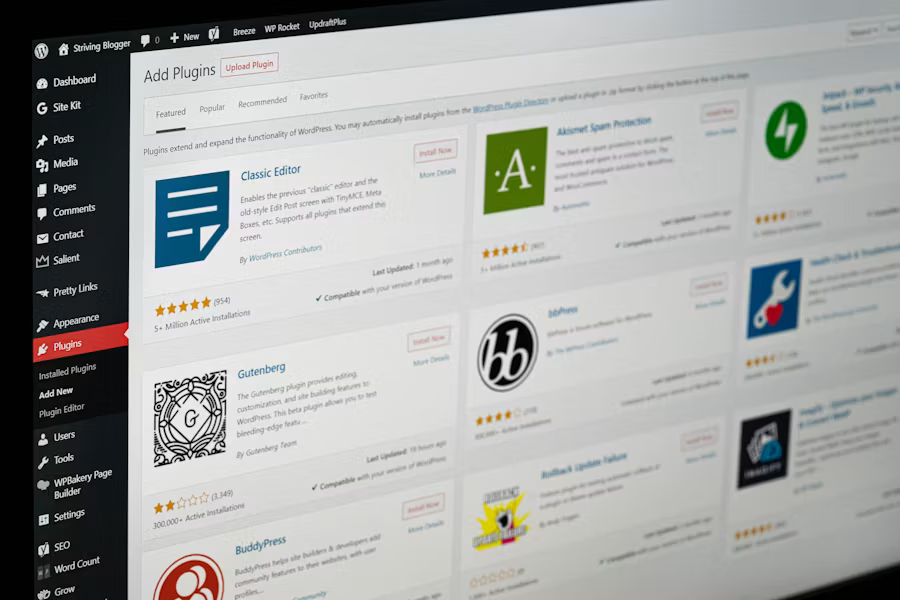
A closed platform will often force you into expensive enterprise tiers or require entirely third-party workarounds to achieve this. WordPress scales infinitely. With access to over 50,000 plugins and a global community of developers, its architecture can be expanded modularly. You can seamlessly transform a basic corporate site into a sprawling international network without ever needing to tear down the foundations and start from scratch.
Designing a website for a new business goes far beyond picking an attractive colour palette and a modern font. True digital design is the intersection of consumer psychology, user experience (UX), and technical performance.
When you are a new entrant to the market, you suffer from a natural trust deficit. Consumers do not know who you are, and they are inherently sceptical of handing over their money or data to an unknown entity. Therefore, your digital presence must aggressively bridge this trust gap through strategic UI/UX design.
Your site must look unconditionally professional. It needs to leverage social proof immediately—even if that is just beta-tester testimonials, prominent industry affiliations, or secure payment badges. Clear, frictionless navigation, transparent contact information, and highly visible “About Us” narratives prove to the user that there is a legitimate, accountable operation behind the screen.
Google does not care how beautiful your website is if its web crawlers cannot understand it. Before launch, your site’s architecture must be logically mapped. This involves creating a clean hierarchy of parent and child pages, ensuring that no page is more than three clicks away from the homepage.
Furthermore, you must establish perfect technical SEO hygiene from day one. This includes generating dynamic XML sitemaps, optimising URL slugs to include target keywords, implementing canonical tags to prevent duplicate content issues, and ensuring your metadata is meticulously crafted. A fast, well-structured site is rewarded with rapid indexing and higher organic search visibility.
It is no longer acceptable to design a website for desktop and simply let the elements shrink to fit a mobile screen. Search engines utilise mobile-first indexing, meaning they evaluate the mobile version of your site to determine its ranking position. Your business website design must feature touch-friendly navigation, highly legible typography on small screens, and incredibly fast image rendering on mobile data networks.
If your business model revolves around selling physical goods, digital downloads, or recurring subscriptions, the complexity of your website launch increases significantly. Shoppers today have zero tolerance for clunky checkouts or security warnings.
To turn WordPress into a commercial powerhouse, the industry standard is WooCommerce. Because WooCommerce is explicitly built for WordPress, it inherits all the SEO benefits and data ownership advantages of the core CMS. Professional e-commerce web design using WooCommerce allows you to fully customise your product and category pages to capture high-intent search traffic.
Unlike generic store builders, WooCommerce allows for limitless customisation of the customer journey. You can implement advanced dynamic pricing models, wholesale portals alongside retail storefronts, and highly specific inventory management systems tailored to your unique supply chain.
Cart abandonment is the silent killer of new e-commerce businesses. To combat this, your checkout process must be engineered for speed and trust. Integrating widely recognised and trusted payment gateways (like Stripe or PayPal) is the bare minimum. You must also incorporate modern express checkout solutions such as Apple Pay and Google Pay, which allow users to complete a purchase with a single biometric click.
A high-converting e-commerce design also removes forced account creation (always offer a guest checkout option) and provides complete transparency regarding shipping costs and delivery timelines before the user reaches the final payment screen.
For a bootstrapped startup, capital is precious. It is incredibly tempting to purchase a £50 pre-made theme, install it yourself, and consider the job done. However, this approach almost always leads to a false economy.
The pursuit of affordable web design should not mean sacrificing functionality and performance. A cheap, bloated theme will cripple your site’s load speed. If your site takes longer than three seconds to load, bounce rates skyrocket, and your conversion rate plummets.
You are effectively pouring money into marketing campaigns only to send that hard-earned traffic to a leaky bucket. By trying to save a few thousand pounds on the initial build, you end up losing tens of thousands of pounds in missed revenue over the first year of trading.
Pre-packaged themes are built to cater to thousands of different businesses, which means they are packed with code and features you will never use. This results in heavy, vulnerable websites.
Investing in custom website development ensures that every line of code serves a distinct purpose for your specific business. Custom development yields lightning-fast load times, flawless security protocols, and bespoke functionalities that give you a competitive edge. It allows you to build specific calculators, unique product configurators, or proprietary client portals that simply cannot be achieved with an off-the-shelf template.
Partnering with the right web design agency is one of the most important relationships your new business will forge. You need more than just graphic designers; you need strategic digital growth partners.
When evaluating a wordpress development agency, look for a team that:
Before you announce your new business to the world, ensure your digital foundation is completely secure and optimized.
Building an online business is a marathon, not a sprint. By choosing WordPress, investing in bespoke development, and prioritizing the user experience, you lay a commercial foundation that will support your brand’s growth for years to come.
Ready to launch your digital presence? Explore our comprehensive web development services to see how our team of experts can architect the perfect platform for your new venture, or contact us today for a strategy consultation.
While the core WordPress open-source software is free to download and use, running a professional business website is not free. You must pay for domain registration, premium managed web hosting, and often premium plugins for advanced functionality (such as security firewalls or specific e-commerce integrations). Additionally, hiring an agency for custom design and development is a necessary investment for a professional launch.
The investment required for a custom WordPress website varies greatly depending on the scope of the project. A high-quality, custom-coded corporate brochure site typically starts from £3,000 to £5,000. However, for a fully bespoke e-commerce platform with complex database requirements, API integrations, and advanced UX design, the cost can range from £8,000 to £20,000+.
Yes, absolutely. WordPress is one of the most powerful platforms for e-commerce when integrated with the WooCommerce plugin. It powers millions of online stores globally. It allows for limitless scalability, full ownership of your customer data, and the flexibility to sell both physical products and digital subscriptions seamlessly.
Startups should hire a professional agency because a website needs to generate revenue, not just exist on the internet. A DIY approach usually results in a slow, poorly optimised site that fails to convert visitors into customers. An experienced agency brings critical expertise in conversion rate optimisation (CRO), technical SEO, cybersecurity, and advanced custom coding, ensuring the site actually functions as a profitable business asset from day one.